
Events
20 November
6 min. read
Cedar Park’s Bell Boulevard Redevelopment Project – A Roadmap to a Public-Private Partnership
By Katherine Caffrey, Assistant City Manager, City of Cedar Park
By Rob Shands, Master Developer, Bell Boulevard Redevelopment Project
Bell in a Nutshell
In 2014, the City of Cedar Park embarked on the journey to redevelop and reinvigorate its oldest commercial corridor, Bell Boulevard. Along the way, it has evolved into an auspicious public-private partnership (P3), projected to generate dividends for the City of Cedar Park’s investment, but not before the City did some “heavy lifting” that included:
- Creating a Master Plan that reflected a shared community vision, by engaging thousands of community members
- Working with the Texas Department of Transportation to allow the City to move a portion of a state-owned highway – a local voter-approved bond project
- Creatively leveraging sales tax dollars to help open a large swath of land, piecing together 40 acres from over a dozen different landowners without the use of eminent domain
Background
It’s no secret that Cedar Park, like other cities across the Austin metro region, has experienced a population and economic boom over the past couple of decades. In Cedar Park, the completion of the toll road opened up the Whitestone Boulevard (RM 1431) corridor, to become Cedar Park’s major social, shopping and dining destination in recent years.
However, another area in the oldest part of the City, once known as the “heart of Cedar Park,” had not experienced the same level of economic growth. Bell Boulevard (US 183), the primary north-south corridor for Cedar Park between Buttercup Creek Boulevard and Park Street, was once the vital community hub. It had become an area that people drive through, not to, which is reflected in this being the only area of town with declining sales tax revenues and somewhat static property values. It looked the same as it did in the 1970s: run down and no cohesion with a picket- effect of countless pole signs. It lacked growth, energy, or any market-driven development.
Community members didn’t need data to tell them Bell needed focused attention. During Cedar Park’s most recent comprehensive planning process, the City consistently heard concerns about Bell from community members. As a result, the City began the process for creating the Bell Boulevard Redevelopment Master Plan. The plan was guided by a task force that included members of City Council, engaged business owners and landowners, the Chamber of Commerce, community leaders, and board members. Thousands who attended community engagement meetings told the City they wantthis area turned around.
They understood that previous efforts to improve Bell had done little to move the needle. That’s because these efforts focused solely on beautification, or ran the entirety of the road through Cedar Park. Through the planning process, the realization came that Cedar Park needed something bigger than beautification in order to reverse the economic trends emerging along the Bell corridor. Much bigger.
Moving Mountains to Move a Road
Before any plans could advance, Cedar Park needed to find a way to move a State highway – or at least a portion of it. Relocating part of the highway would allow
the City to make important highway safety and mobility improvements, and open land for redevelopment of what community members expressed they wanted from the Bell Boulevard Redevelopment Master Plan: the area revitalized as a destination – a special place, unique to Cedar Park. It would serve as a catalyst to the rest of the area.
It turns out that, while challenging, it is possible to move a state-owned highway. Cityleaders and staffworked closely with the Texas Department of Transportation (TxDOT) to allow Cedar Park to move a portion of the highway if the City paid for the construction of the new section of roadway. In 2015, voters approved $63 million in General Obligation Bonds for Road Projects that could include the Bell Boulevard Realignment Project. Over the years, the City completed design of the highway realignment and strategically acquired necessary property. In September, Cedar Park officially broke ground on this construction project that relocates a stretch of Bell Boulevard to the east. The road project is the critical path for the Bell Boulevard Redevelopment, yet it has proven to be the easy part of the redevelopment process.
Putting Together Pieces of the Puzzle
The next massive step – or steps – the City took before it searched for a master developer to take on the project was to assemble the 40 acres of needed land. The City already owned about 12 acres, but there were more than a dozen other individual property owners in the area. While some of the landowners approached the City to make a deal, the coordination and negotiation involved in the assemblage process was a significant task.
The City was able to leverage Community Development Type B community development funds from local sales tax to, over time, acquire about 28 acres of land from willing sellers – all done, without the use of eminent domain. This significant public investment will pay dividends for Cedar Park in the long run, as property values will rise sharply for this area and sales tax collections are projected to be on-trend with other parts of the City. Additionally, as land is leased and developed, it will pay for future phases. This public investment in private land strengthened the City’s leveraging position to attract experienced and quality master developers.
Finding the Right Master Development Partner to Execute the Community’s Vision
The Bell Boulevard Redevelopment Master Plan is informed by redevelopment experts from across the nation, and is supported with financial modeling and forecasting for the public and private sectors.
The project has long been envisioned to be a public- private partnership, a model used for projects that are long-term, large-scale, and transformative. The P3 model creates a framework for sharing financial burden of a big project like this and sharing the upside benefits, and the master developer is directly accountable to the City. In project terms, the master developer is responsible for the execution of all aspects—design, engineering, construction of infrastructure, and ultimately creating a cohesive development that meets the market. At full build-out, the 40-acre Bell District is anticipated to include approximately 16 acres of greenspace, the City’s new library, a park and social hub, restaurants, multiple blocks of high-density residential – some with ground-floor retail – professional office space and individually-owned urban brownstones. With so much hanging in the balance, City leaders understood the importance of finding the right partner to realize the community’s vision.
In May of 2018, Cedar Park began the several months-long process of procuring a master developer. It began with a Request for Qualifications (RFQ). A committee comprised of the Mayor, City Council members, and key City staff reviewed proposals and chose two developers to respond to an invitation-only Request for Proposals (RFP) in September of that year. During the process, the City looked at needs and wants. One of the top wants was for the developer to consider placement of the new Cedar Park Public Library, also a 2015 voter-approved General Obligation Bond project, within the Bell District. Both developer finalists saw the Library as having a potential to activate the development.
Knowing that this project’s lifespan was extensive, and that much of its success was contingent on an experienced developer and functioning partnership, the City was extremely careful in its consideration. The committee ultimately chose RedLeaf as the sole finalist to move forward in the Master Development Agreement negotiation process.
The key reason was the master developer’s strong expression of support for the community’s vision for placemaking within the Bell Boulevard District as the new civic heart for Cedar Park. Early on, in the selection process the City made a commitment to take the time to find the right master developer and build and maintain the relationship so that if or when things become difficult, they could be resolved. It felt more like a relationship and less like a transaction, it was said at the time the committee made its selection.
The developer the committee choses is an Austin-based commercial real estate firm whose cornerstone projects are known for transforming communities. Their portfolio includes working with public entities such as cities and educational campuses like Austin Community College. In addition to the P3 Highland Mall redevelopment with Austin Community College, they were co-developer for La Frontera Plaza in Round Rock, and master developer for the City of Austin Planning and Development Center in Highland.
Cedar Park and the master developer spent all of 2019 negotiating the Master Development Agreement, inking the deal in February 2020. This was a much faster process than what is often seen with other entities, and is a testament to the City and developer’s commitment to focus on the project. The master developer describes the Bell Boulevard Redevelopment Project as the right opportunity in the right place and at the right time – a rare opportunity to be part of a project with regional significance and generational impact.
From the get-go, the goal was to build something special that reflects the community’s vision. In June 2019, the City and master developer teamed up to host “A Day in the Bell District”, a community event to test some ideas and concepts. By this time, the library has evolved into a critical part of making this development an energized, vibrant district. More than 600 community members turned out to express their excitement surrounding the project.
Construction on the road realignment is scheduled to finish by the end of 2021; at that point, the construction of the Bell District can begin. While the term of the agreement is for 20 years, it is our collective plan to complete the development in 10 to 12 years. Suffice it to say that the Bell Boulevard Redevelopment Project has been a long time in the making, and has a long way to go before completion. It’s important to remember that projects of this magnitude don’t happen overnight. Neither does the relationship that evolves between the city, developer, and community.
The developer told us early on that places are defined by the people – that people are not defined by the place. We’ve learned the same can be said about P3s. They are defined by the people. H
For more information on the Bell Redevelopment Project, visit www.belldistrict.com.
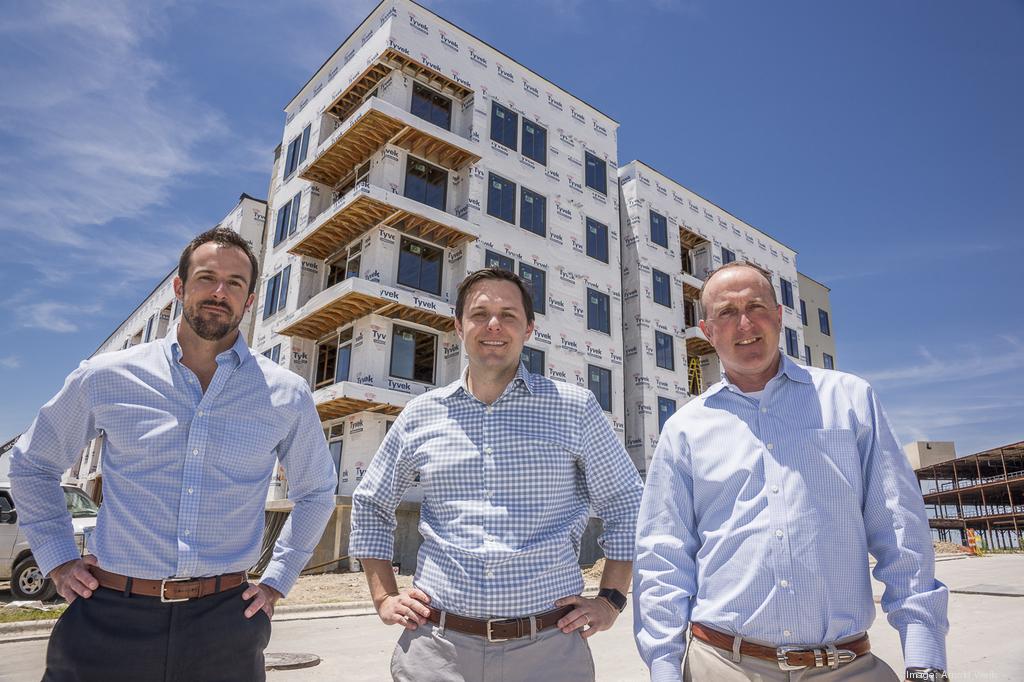
How RedLeaf Properties is Transforming Austin’s Old Highland Mall
By Jan Buchholz 5/4/2017 Until now, most of the publicity has centered around Austin Community College and its ambitious renovations to the obsolete regional mall — creating academic spaces that cater to a range of disciplines. “People have a misconception about Highland because they think it’s all ACC,” said Matt Whelan, founder and principal of RedLeaf […]
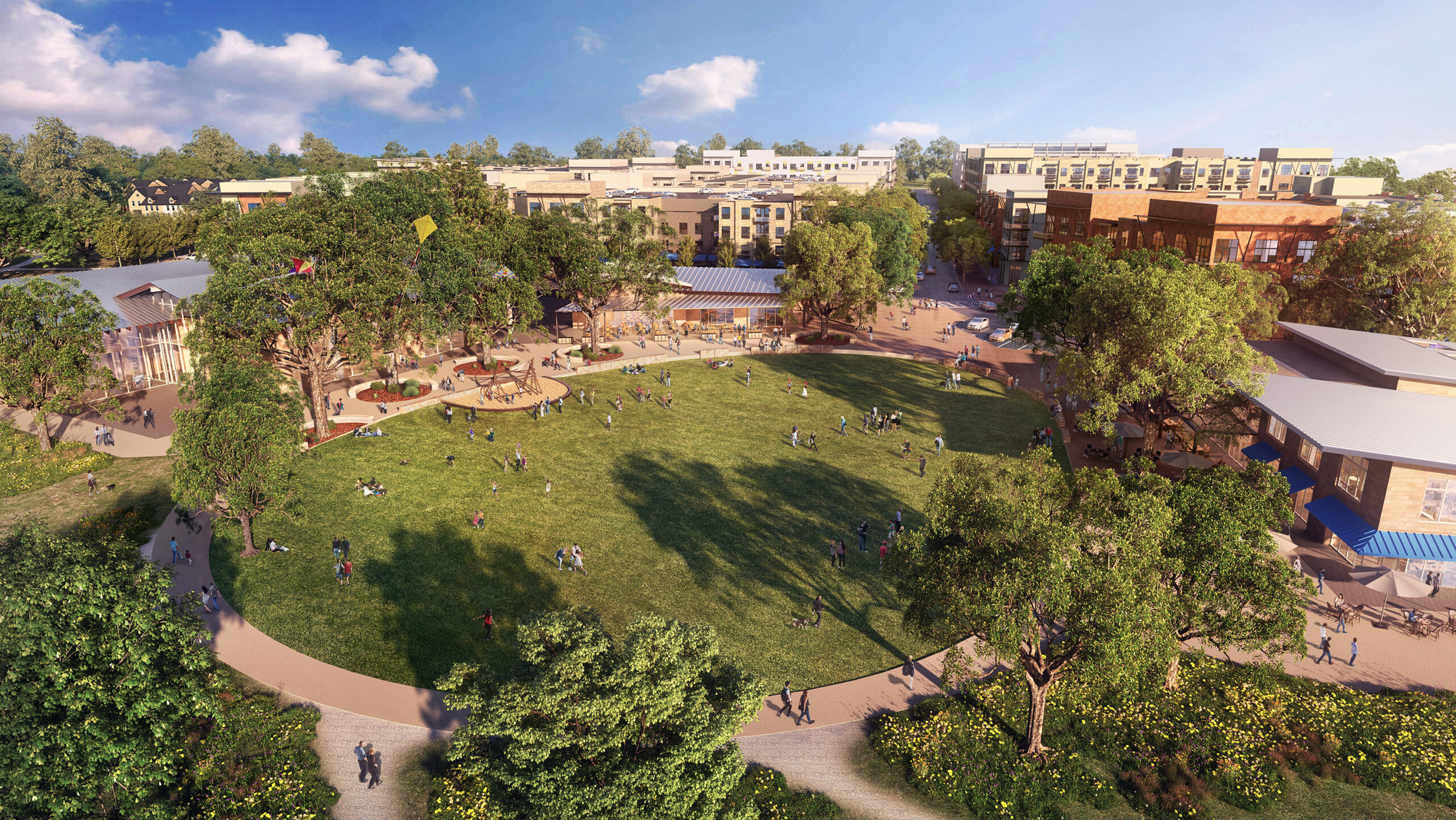
CREATING DOWNTOWNS – Cedar Park and Leander Set to Start Landmark Projects
By Claire Osborn 12/5/22 Long-planned projects to build down- town areas in Cedar Park and Leander will begin to take shape in 2023, when construction begins on their landmark features. Those components are an entertain- ment venue with 13 restaurants and a town square in Leander and apartments, retail and a community space for live […]
Curbed Austin Lists Highland in Austin’s Most Important Developments of the Decade
Which building projects had biggest impact in the last 10 years? The transformation of North Loop’s Highland Mall into the Austin Community College Highland campus is a notable redevelopment. Read Full Article at Curbed Austin.